I bet you’ve heard it takes 21 days to create a new habit. But did you know that it takes 90 days to make the new habit permanent? There are 90 days from Sept 25th to Christmas Eve. What a great time to create the new habit you’ve been thinking of or putting off. What have you been wanting to start with your family? One meal a day together? Family walks? Face Timing grandparents? Writing in a family gratitude journal? Giving thanks at meals? Think about one simple change you can all make or one activity you can add and commit the next 90 days to fulfilling it. Keep a calendar to mark off your family’s progress as you count down to 12/24. Celebrate small wins along the way such as creating a family cheer at week 1 or throwing confetti at week 4. Leave one another notes of encouragement along the way. Thank your family members for being positive, motivating and supportive. Days may be rough and you may skip a day or two. Don’t get discouraged. That’s when the power of family comes into play and you get through it together. Keep the end in mind and focus on strategies that help when the going gets tough! Make sure you celebrate big on Christmas Eve! This process will be a huge life lesson for your kids…creating positive change with loved ones by your side. And a new yearly tradition may have started too❤︎
What will your family take on in the next 90 days?
Now that I’m in my mid40s, there are SO many things I wish I had done sooner! They say wisdom comes with age and I am definitely seeing that. Studies also show that woman are happier as they age. If anything, I see a confidence and contentment emerge that I didn’t necessarily have before. I had my first two children less than 1 1/2 years apart just when I hit 30. Life was busy and I was totally immersed in the toddler years then preschools years for what seemed like ages. Several of my friends had mini-vans and I was in awe of the space, all the cup holders, and automatic doors. Yet, I couldn’t bring myself to buy one. I had this “never” list in my head…never get a dog, never have more the 2 kids, and never, ever get a mini-van. Not sure how this mantra started but I stuck to it for years. Was I afraid to get older? What would happen if I altered this self-perception? Life was good with a Honda Accord, which turned into a Ford Explorer as we wanted more room. Life was incredible with two kids, but a yearning was there for more. Wouldn’t a dog be a great companion for our family even when I subconsciously knew I’d be the one letting it out, taking it on walks, scheduling vet and grooming appointments? Well, mid30s came and a third baby blessed our family. A few years later, our goldendoodle arrived. And yes, it’s true, I now happily and enthusiastically drive a min-van! What took me SO long?!! There’s so much space. And cup holders and storage galore. And a DVD to quiet those kids for the ‘are we there yet’ trips!! And as my son becomes a young man at 5ft 9in and growing, he has plenty of legroom anywhere he decides to sit. Seven high school sailors with lifejackets and gear off to a regatta? I’ll drive! (Which is awesome because I get to spend time with my teenagers and their friends since I can fit everyone…comfortably!) Oh, and the dog can spread out easily when I take out one of the middle seats-dog bed included! Essentially, it’s a mini-moving van that is going to come in real handy when packing up for college, which will be here before I know it. Now I’m not so sure I can live without the mini-van. I may never want to live without a mini-van as I have lived on the other side of the automatic doors. My new life mantra is, “Never Say Never” because some of life’s greatest blessings are the ones we never imagine. However, I will admit, when I am stopped in front of a store with mirrored glass and I catch a glimpse of a woman sitting in the driver’s seat, it still takes a second to realize it’s me. ❤︎
I believe sharing experiences and learning new strategies are the ways we better ourselves as parents. If you think this blog will help other families on their journey of parenthood, please share the link. It takes a community to raise our kids and live simply happier.❤︎
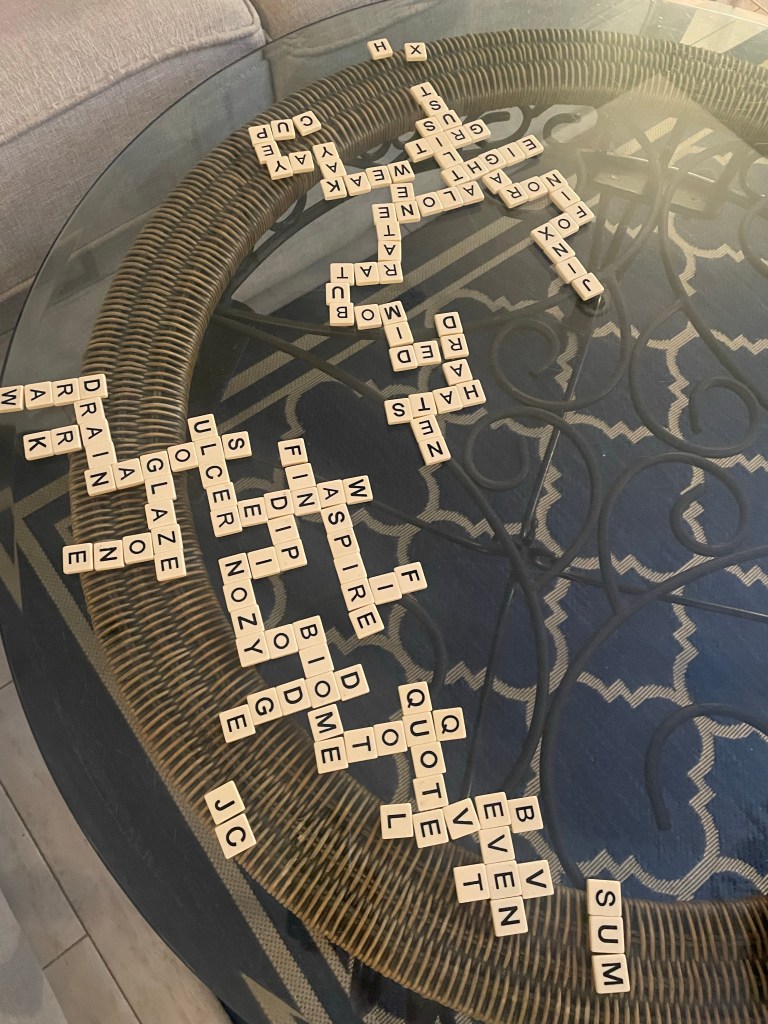
Take inventory…what’s on your coffee table? And by coffee table I mean the table that’s in your family room, the table in front of your TV where feet gently rest or the remote finds a home. Mine is usually stacked with magazines that want to be read, stylish hardcover books that collect dust and candles (because I do love candles!). But more recently, I cleared off the table…a clean slate. With school starting, I realized time together as a family is going to be at a premium. For our home, that means TV viewing goes down tremendously so that we can actually spend time with one another!! Hence, we don’t watch television Monday-Thursday. It’s been our rule since the kids were young simply because I was tired of arguing with them about how much they could watch (I’ll write a post about this soon!) But the coffee table is still a focal point in our family room without the TV being used. So, how could we better use it? Out came Bananagrams. Now I don’t know the real way to play Bananagrams, if there is one. We just put letter tiles out and make words. But we don’t clean them up! I found if we leave the words and letters on the table, the kids will sporadically pop over and sit to add words. Then comes another child with a parent and soon enough we are gathered by the coffee table. I then took a bowl of colorful pattern blocks and left them off to the side. Now creativity takes over and beautiful designs are created as we sit and chat together. Can your coffee table become your new family hub?
I believe sharing experiences and learning new strategies are the ways we better ourselves as parents. If you think this blog will help other families on their journey of parenthood, please share the link. It takes a community to raise our kids and live simply happier.❤︎
“Don’t worry that Children never listen to you; worry that they are always watching you.” (Robert Fulghum)
When you become a parent, you have little shadows. Inevitably, you have little ones following your every move and copying you. As your children get older, they may wander farther from your physical presence, but they are still always watching. With my teenagers, I have have found that I need to be more cognizant of my actions as they question what I ask of them instead of blindly following all that I say. For instance, ‘bad’ words have always been off-limits in our home. Now ‘bad’ words were not just curse words but included stupid, dumb and idiot. Now this wasn’t too hard to model because these words aren’t in our lexicon. I didn’t ban these from my children but then use them in my daily discourse. Instead, I consistently omitted them or replaced with another word (example: hate becomes intensely dislike).
It is not easy trying to make the right decision all the time. We tell our children how we want them to act, and what to say, but do we always do it ourselves? We are not perfect, nor should we be. Yet we can be more conscious. Think about the small moments throughout our days and they ways we carry ourselves, decisions we make, how we interact with others. This is what our children see and essentially how they learn to navigate their world. Maybe it’s time to pause a moment before responding to someone who cuts you off when driving or when an older person is struggling to put groceries in the trunk of her car. These are little moments that will shape your child’s understanding of what to do when they are in a similar situation.
Modeling educational standards is important too. Reading aloud to your child is encouraged by educators from essentially birth because it has such an incredibly positive effect on intellectual, academic, emotional, and social growth. As your children get older, promoting independent reading is just as crucial. But life gets busy and it’s hard to make sure it’s getting done. But what if as a family you have quiet reading time on school nights? From 8-8:30pm everyone grabs a book, magazine, or newspaper and simply reads! It can be done independently in separate bedrooms as a time to wind down before lights go out or collectively in the living room as family time. Either way, you are reading and they will see that you do value it because you are doing it!
We took our end of summer vacation to Hilton Head last week (which we absolutely LOVED!!). My older two know they should pack a book because to me, reading is a must on vacation! When we arrived at the airport, my kids quietly muttered that they forgot books. Not a big deal, I declared. They each have their own money that can use to purchase a new book at the airport bookstore. There was no complaining since they have come to understand that our family reads on vacation. They perused the selections and proudly purchased their new reading material. My oldest is not a reader by choice. She never has been and while I respect that it may not be her tendency, I value the importance of reading beyond academic books. She read her new book in 3 days and asked to go to the local bookstore to buy another one, which in fact turned into 2 new books because she couldn’t decide which she liked best. This was a first for her!! Would it have happened if my husband and I didn’t pack our own books and set the example of reading? All I know is, if you join us on vacation, pack a book!
School has started and kids are back in class. I’ve been getting very reflective lately as I have a junior and sophomore in high school. I feel like time is ticking…FAST…and there are things I was to accomplish as a parent. I believe my job is to guide these unique children to become the best versions of themselves as they leave my nest. What will I do with this time?
I was watching the news this morning and the reporter was discussing the need for teachers to monitor what students are eating during the school day. And honestly I was taken aback. Teachers are given more and more and more to do within the same timeframe. They are handed all academics, moral development, socio-emotional health, socialization, conflict resolution and now nutrition. But the reason I paused was not to necessarily defend teachers, but to wake-up parents. There are 168 hours in a week. Let’s estimate your child is in school eight hours a day…that’s 40 hours per week of mandated time out of the home. The other 128 hours is up to you! And that’s powerful!!
How do you fill your child’s time? How much sleep are they getting? Who watches your child for after school care? What exercise or sports are they engaged in? What meals and snacks are fueling their bodies? Who are they hanging out with? What are they viewing on screens or listening to in music? Do you make time for Church? Are you volunteering as a family? How much time is devoted to being together? Think hard and take inventory, but without blame or excuses. Acknowledge your reality and make changes if it’s not what you envision. Small changes lead to big results so start somewhere!
So my question to all of us parents is, “What are you doing for your children with 128 hours per week?”
‘Tis the time for back-to-school shopping! Stick me in a store brimming with brightly colored markers, stacks of post-it notes, fun folders and planners galore….I’m a very happy woman. As a former elementary teacher, this time of year is filled with promise, hope, and growth. But while parents are busy purchasing items off the class supply lists, let’s remember to stuff our kids’ backpacks’ with socio-emotional essentials as well.
Starting a new grade or school can be emotionally overwhelming. There are many changes in friends, schedules and routines, new teachers and personalities, coping with homework demands, and navigating teammates. Inevitably, emotions will be running the gamut and some days will be awesome and others downright terrible. So what can we teach our kids to help manage the good and the bad? Positivity, simply having an optimistic attitude!
“Positive thinking is a mental attitude that perceives situations in a constructive way. It does not mean ignoring the negative. Rather, a positive thinker acknowledges a situation and looks at it productively.”1 Making a mental switch is not always easy, but having a positive mindset lends to resilience, self-efficacy, decreased anxiety, and more happiness. This is a skill that needs practice and parents can be great role models. For instance, your child is sad to learn that his best friend isn’t in his new class. Acknowledge his feelings of disappointment, but point out the potential benefits (having a chance to develop other friendships, discover things in common with other people, enlarging social group, planning special outings with his bf). Your positive attitude will help him reframe his initial thoughts and subsequent feelings in a more hopeful manner.
Academically, students who are positive in their abilities and when they come across challenges fare much better. “Students who were positive about math tended to be more interested in it and were also more likely to practice it, and this positive perception towards math and their abilities resulted in enhanced memory and more efficient problem-solving” (How Maintaining a Positive Outlook Can Help Us Learn). To boost memory and performance, guide your kids in attitude. If your child gets stumped on a math problem, teach her to enthusiastically say, “Bring on the challenge!” She’ll be better able to cope and solve.
So while you’re stuffing those backpacks with pencils, folders, and dry-eraser markers, don’t forget about those emotional supplies that will last a lifetime.❤︎
Want more inspiration? Like our new Facebook page!
Have you taken a look around lately and noticed how casual clothing has become? A typical outfit for my teenagers is sports shorts and a t-shirt, possibly with a hooded sweatshirt. I easily fall into this very informal category wearing workout clothes, when in fact, I’m not usually exercising. The pandemic did not help this matter at all. We were given a great excuse to live at home comfortably in pjs for at least 6 days a week. Sunday was the only day we did get dressed up. We are Greek Orthodox and our Church community does get fairly dressed up for service. Men wear suits or jackets, women wear skirts or dresses, boys wear button-down shirts or polos with khakis while girls put on dresses. I have come to truly appreciate the level of formality that comes with attending Church as a family. This past weekend, I watched my children walk into a Church that was new to us. I couldn’t help but notice they stood a little taller, strolled confidently, and greeted everyone with a smile.
“Individuals dressed professionally exhibit significantly greater measures of self-perception, compared to those in both casual attire and their own clothing. By simply wearing professional outfits, (students) had higher self-esteem, self-efficacy.”1 Is dressing up a skill we should teach our children more regularly?
My kids actually like getting ready for Church. It is their norm. No arguing, no squirming saying the clothing is uncomfortable; it’s simply expected. I’ve now transferred this ‘looking nice’ attire for when we go out to restaurants. First of all, it is getting increasingly expensive to eat out as a family of five and I want them to acknowledge that it’s a special event when we do venture out. If putting on nicer clothes helps them feel better and even act better, then maybe Sunday’s best should be worn the other 6 days per week?!
❤︎ Want more inspiration? Like our new Facebook page!
Jib, tack, trapping, beam reach, turtled, wing on wing…All jargon to me, but not to my teenagers. They teach me about the world of sailing, specifically racing 420s. They become the experts, showing me the ropes or knots of this sport. They take pride in knowing more than me and I let them take ownership of explaining the complexities, navigating the rules, and making sense of watching 65 boats on a race course at sea.
When was the last time your children taught you a skill? Now, my kids teach me many things each and every day such as patience and how many loads of laundry is possible with a family of five. But I’m talking about a tangible skill or facts that may amaze you or knowledge that you once knew but seem to forget quickly these days. Think of those preschoolers who memorize all the scientific names of dinosaurs or the rapid creation of a video game using code you don’t possibly fathom by your middle schoolers. Instead of overlooking the technicalities of their knowledge, celebrate it. Have them become the experts and teach you all that they know, well at least one area at a time. Take the passenger seat and try not to interject your ideas too often. Simply enjoy watching your child take pride, develop confidence, expand their expertise, work through problems, grow trust, and see the light in their eyes as they share what they love with you.
For the next few weeks, you’ll find me harborside throughout Cape Cod, binoculars in hand, cheering on two sailors waiting for them to come ashore and explain what I was even watching. The wind is in their sails ❤︎
❤︎ Want more inspiration? Like our new Facebook page!
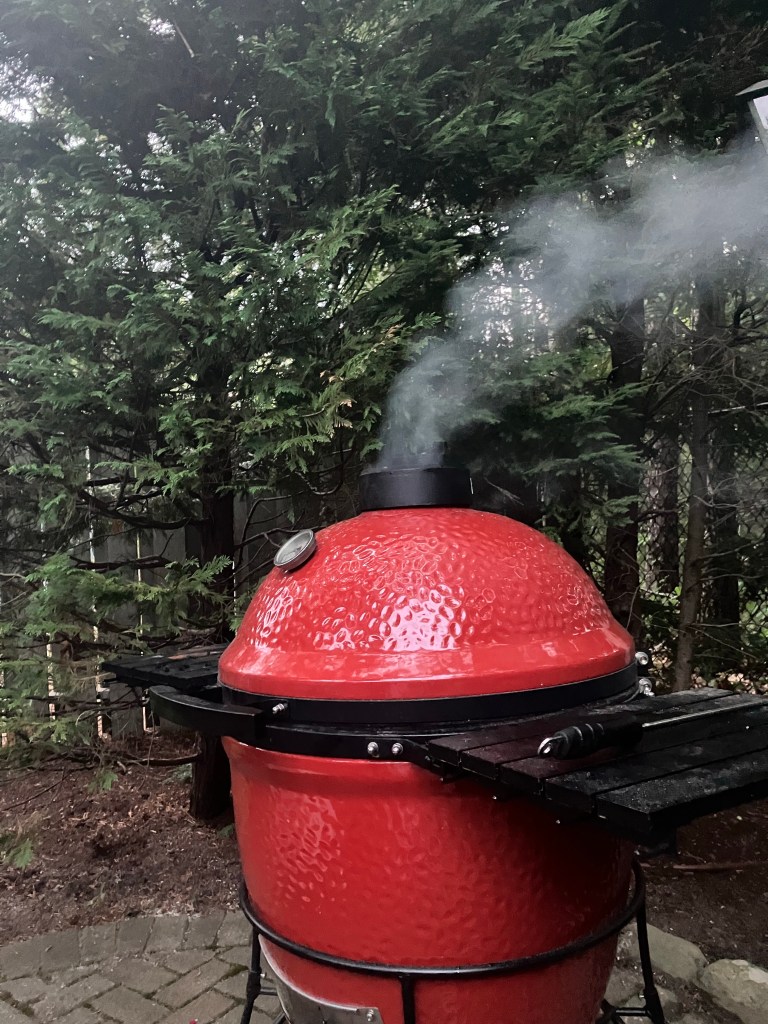
It’s 4:30am on a Saturday morning, still dark and much earlier than I typically write my entries. The smell of newly lit wood is beginning to linger in the air. Today’s menu…pork butt rubbed with a blend of paprika and brown sugar, corn pudding, and cole slaw. The chef…my 15 year old son. His new hobby is cooking on a smoker and he has truly developed a talent over the last few months. From brisket to sea bass (which he caught) to ribs to cheese-stuffed jalapenos, this kid is on fire!! And our family gets to savor his new skills.
Back in February, we headed to South to visit family. My brother has become engrossed in the world of smoking food, which I had little knowledge about. But my son took a huge interest in it (do I mention he’s eating nonstop these days!) and cooked side-by-side his uncle for one week straight. Fast forward to summer vacation and my brother was visiting us up North. Knowing that a smoke-off would ensue, my parents surprised my son with a smoker (technically theirs, yet fully knowing he would take ownership).
“Experts agree that having passionate interests in life improves your effectiveness and well-being.” 1 Hobbies are healthy!2 They build self-awareness, identity, confidence, a skill-set, curiosity, problem-solving, and eventual mastery. Fostering interests build connections between parents and children as well. We give support and enthusiasm while following their lead. Encouraging kids to try new things can ignite passions and careers later in life.
What do your kids like to do in their spare time? Do you notice a natural tendency in some area? Consider activities/interests available in your area. I do hope my son continues to develop his culinary interests for a very, very long time because I don’t mind washing dishes!
❤︎ Want more inspiration? Like our new Facebook page!
Giving is innate for mothers. It’s essentially what we do and who we are. However, given the mundane nature of homemaking, women can become dissatisfied and unfulfilled, often forgetting what purpose there is in daily tasks. “What woman resents is not so much giving herself in pieces as giving herself purposelessly. What we fear is not so much that our energy may be leaking away through small outlets as that it may be going ‘down the drain'” (40).
Oxford defines homemaking as the creation of a home, especially as a pleasant place in which to live. What an honor to cultivate a loving, respectful, supportive environment for people you care most about. But it is hard work!! To be completely honest, I never wanted to be a stay-at-home mom. It was never how I envisioned my life, probably because I grew up with a single mother who worked full-time. We struggled financially when I was growing up and I knew putting myself through college and graduate school would provide a better life for myself and my family. Yet God had His own plans for me, which is usually how it goes. It took me years to embrace homemaking and realize the real purpose it holds, the breadth it encompasses, and my value within it.
“Purposeful giving is not as apt to deplete one’s resources; it belongs to that natural order of giving that seems to renew itself even in the act of depletion. The more one gives, the more one has to give” (41). With acknowledgment of usefulness, even without financial gain, mothers gain strength and replenish their sense of self. Homemaking is not a full-time job for all mothers, but we all need to see the immense worth in the care, time, and purposeful thought we heartfully dedicate to our families.
❤︎ Want more inspiration? Like our new Facebook page!
People find solace, rejuvenation, and calm from different places in nature. While I like to hike on wooded trails, jump into a cool mountainside lake, and explore botanical gardens, the sea is my sanctuary. Walking along any beach brings instant peace. My thoughts clear, my breath slows, and I feel lighter. The crashing of waves soothes my mind, the soft sand warms my body, and the salt air refreshes my soul.
I happened upon my mother’s copy of Gift from the Sea by Anne Morrow Lindbergh. Do you ever feel you come across books that you need in a specific moment of time even if you don’t realize it at first? Well, Gift of the Sea was my muse for the next few blog entries as I process how I felt, what I thought, and how this book resonated with me as a woman, mother, and wife in the middle-age season of life.
Simplicity…A way of life, of being, of living. A simple word yet living simply is one of the most difficult things for mothers to do. Our current society, obligations, careers, and caregiving do not help us reach a life of simplicity but instead of multiplicity. How are we supposed to reach a balance between caring for ourselves and fulfilling everything else? Can we live in grace, with inner harmony? “There is no easy answer, no complete answer…perhaps a first step is in simplification of life, in cutting out some of the distractions. But how?” (23).
Simplifying has different meanings for different mothers based upon where they are in life, how many young children are at home, homeschooling vs in-school, household responsibilities, being employed outside of the home, spousal support, and community commitments, to name a few. At Essentialist Family, we have discussed the importance of taking inventory of where you spend your time. When you write down EVERYTHING you do, you can begin to acknowledge that it’s A LOT, and that some things need to be crossed off your list. Mentally and physically eliminating the most obvious unessential items, is a start. It will give you the confidence to tackle harder decisions. Practice makes this process easier and the more you rewrite your list, the more you’ll be able to let go.
Simplify your worldly life. We all have found ourselves caught up in buying the newest gadget, the tool that promises to save us time, the newer car, the extra pair of shoes because they were on sale, the new lunchbox organizers to replace the reusable snack pouches. But it’s still more stuff! Not less, but more! How can we physically decrease the things in our space if we continue to shop? Does scrolling on Pinterest entice us to buy things we truly don’t need? Are we trying to live up to someone else’s image on FaceBook and purchasing items like our Friends? Give yourself a month or two or three to really think about what you are buying. Remember, the key here is less, so if you don’t truly need it, then wait. Next, go through your home, one room at a time and donate or discard clothes, toys, kicknacks, and books you don’t need. (Read our post: Spark Joy Simply in Your Home for guidance (https://wordpress.com/post/theessentialistfamily.com/326).
Simplify your shelter. I’m not saying downsize your home even though we’ve watched Tiny House to prove it can be done. Instead, it’s all about evaluating the rooms of your current home and getting rid/donating extra furniture, wall hangings, throw rugs, closets full of spare sheets and blankets that don’t get used except when company visits. Taking photos off the bookcase shelves and replacing them with a few cherished memories. You’ll begin to feel the peace in your home when it’s clear. Harmony fills the gaps where unnecessary stuff was. Joy begins where clutter ends. Make a daily effort to keep stuff away.
“Simplification of outward life is not enough. It is merely the outside…the complete answer is not to be found on the outside, in an outward mode of living. This is only a technique, a road to grace. The final answer, I know, is always inside. But the outside can give a clue, can help one to find the inside answer” (29).
Stay tuned for the next post…
*Please note: Gift from the Sea❤︎ is best read with toes in the sand!
Some of my favorite beaches: Old Silver, Falmouth, Cape Cod; Poipu, Kauai; Long Boat Key, FL; Goose Rocks, Kennebunkport, Maine.
Did you know that there is a National Institute for Play? I’m serious because this is important stuff! Children are spending less time than ever playing but it’s essential to their overall physical, emotional, social and emotional health! So as parents, we need to make the time and prioritize playing!
*Put it on your daily calendar. When you see play written down, you’ll most likely follow through and remember to give the kids time to play.
*Schedule short and long playtimes. 20 minutes is enough time to play on busy days but try to incorporate longer periods as well since more creativity and imagination need sustained time.
*Make it a habit. Schedule playtime as a family at the same time several days per week. Sunday after Church? Friday night board games?
*Create a go-to family favorite list to spark ideas. Write activities on popsicle sticks and place in a jar to be randomly picked.
*Simple is best! No fancy games or toys needed.
*Try not to intervene when they are bored! Figuring out what to do with free time is a skill!
*Make time for playing in the fresh air!
When parents fully realize the importance of play, it is easier to make it happen. Play develops creativity, problem-solving, critical thinking, executive functioning, motor skills, social interactions, self-confidence, self-awareness, and fairness, to name just a few.
Next time your child wants to watch TV tell them to, “Go Play!”
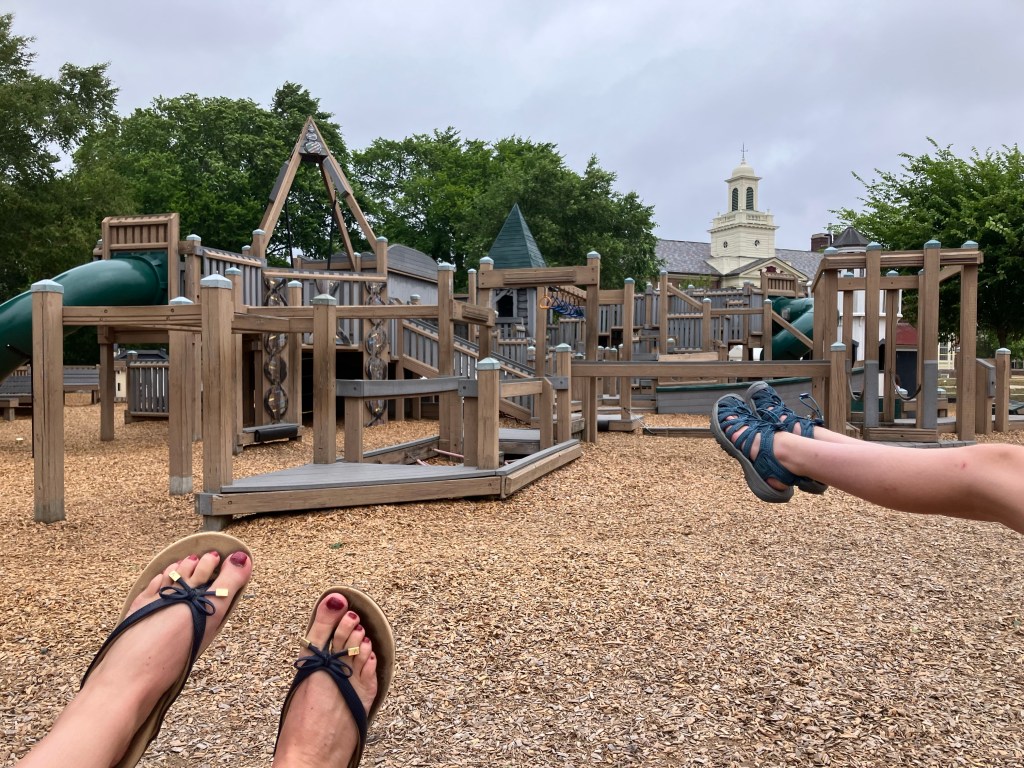
Couldn’t pass up the opportunity to swing as we passed a playground! Simple joy!
With the hustle and bustle of daily life, slowing down to notice the little things is not always on our minds. However, teaching your kids to look all around, can easily increase their happiness. Ingrid Fetell Lee, who wrote, Joyful: The Surprising Power of Ordinary Things to Create Extraordinary Happiness, reminds us how simple it can be.
*Feel the sun and spend time outside
*Notice vibrant colors and the feelings they elicit
*Stop and smell the flowers, literally
*Find ways to play-game of tag or basketball, cards, throw the ball for your pup, cornhole competition
*Develop hobbies
*Choose happy colors for paint, clothes, food
*Embrace quirkiness
*Listen to the sounds of nature
*Celebrate everything big and small
Find out what brings your family joy through Ingrid’s Joyful Toolkit. This is a fabulous dinner discussion and can be revisited as your family grows and develops in each season of life:
Find your joy-Where are you happy? What is joyful about it? Who makes you happy and why? What do you have in your home that brings pure joy? What activities bring happiness to your family? What are your killjoys? What depletes all your happiness?
2. Actively make your joy-Redecorate or rearrange furniture in your home, hang photos/pictures of happy memories, keep useful objects that you adore, bring in plants and flowers, open the curtains for more sunlight. Home is where your heart and happiness are. Wear clothes that make you feel good! Plan activities that you have fun doing. Gracefully say, “No,” to outings, commitments, and afterschool activities that suck all your family’s joy.
“Joy is what makes life worth living” (297). Can you simply add more joy to your everyday life? Try!
Gardening is a hobby for many. Kids are born nature-lovers and getting their hands dirty comes easy to them…sometimes too easy and albeit at inconvenient times. However, the next time you are planting in your garden, pulling weeds, watering plants, or trimming bushes, encourage your kids to join you. You may be surprised at just how important gardening is to children’s overall development.
*Helps with impulse control since things don’t always work out a planned
*Provides quiet mental space to be with one’s own thoughts
*Protected physical space
*Cultivates imagination and creativity
*Presence of calm
*Daydreaming allowed
*Encourages the spirit of flow
*Develops a sense of purpose and an identity
*Increases self-confidence and self-worth
*Understands the cyclical nature of life
*Develops an attitude of caring and nurturing
*Strengthens social interactions
*Provides motivation
*Gives a hands-on approach to learning integrating motor, sensory, emotional and cognitive development
“Just as in bringing up children, in the garden we are never fully in control. Beyond providing the conditions for growth, there is only so much a gardener can do; the rest is down to the life force of plants, and they will grow in their own time and in their own way” (31).
So what are you waiting for?! Get planting!!
The Well-Gardened Mind: The Restorative Power of Nature, by Sue Stuart-Smith
When a friend first inquired what my enneagram was, I had no idea what she was talking about. But then I listened to a podcast that highlighted The Road Back to You, by Ian Morgan Cron and Suzanne Stabile, and I was intrigued. “The purpose of the Enneagram is to develop self-knowledge and learn how to recognize and dis-identify with the parts of our personalities that limit us so we can be reunited with our truest and best selves” (24). There are nine personality types: Perfectionist, Helper, Performer, Romantic, Investigator, Loyalist, Enthusiast, Challenger, Peacemaker. Each chapter begins with simple questions that make you self-reflect, essentially revealing your tendencies and personality type. Just make sure you are completely honest! One of the best tips they gave was to narrow a few types down that you feel represent your personality and then ask your closest family or friends which one they think embodies you best. While I thought I was the Helper, it was unanimous that I was the Perfectionist by my children! While a tad unsure at first, I delved into the characteristics of Type 1 and sure enough, it is me. I soon discovered why I tend to make certain decisions, what stresses me out, what I need to thrive, and how I can be the very best version of me. I did learn type 1s tend to have rapid speech, which is definitely me, but this can lead from a teaching perspective to preaching. I never considered this aspect before yet quickly realized I need to be conscious of how I blog and share information, thoughts and inspiration. This layer of understanding has allowed me not to shy away from my tendencies, but embrace them and use them in a positive way.
Soon enough, my children discovered their enneagrams: a Peacemaker, a Helper, and a Performer. Together, we began to understand one another better. Developing compassion strengthens families and all relationships. Communication becomes more effective while respecting and honoring differences. Being a 1w2 makes me the unique person I am. I think my children see that more clearly now just as they recevied a glimpse into their own persnolities. What’s your enneagram?


















 the Essentialist Family